How to Plan a Wellness Retreat Abroad (And Why It's Harder Than You Think)

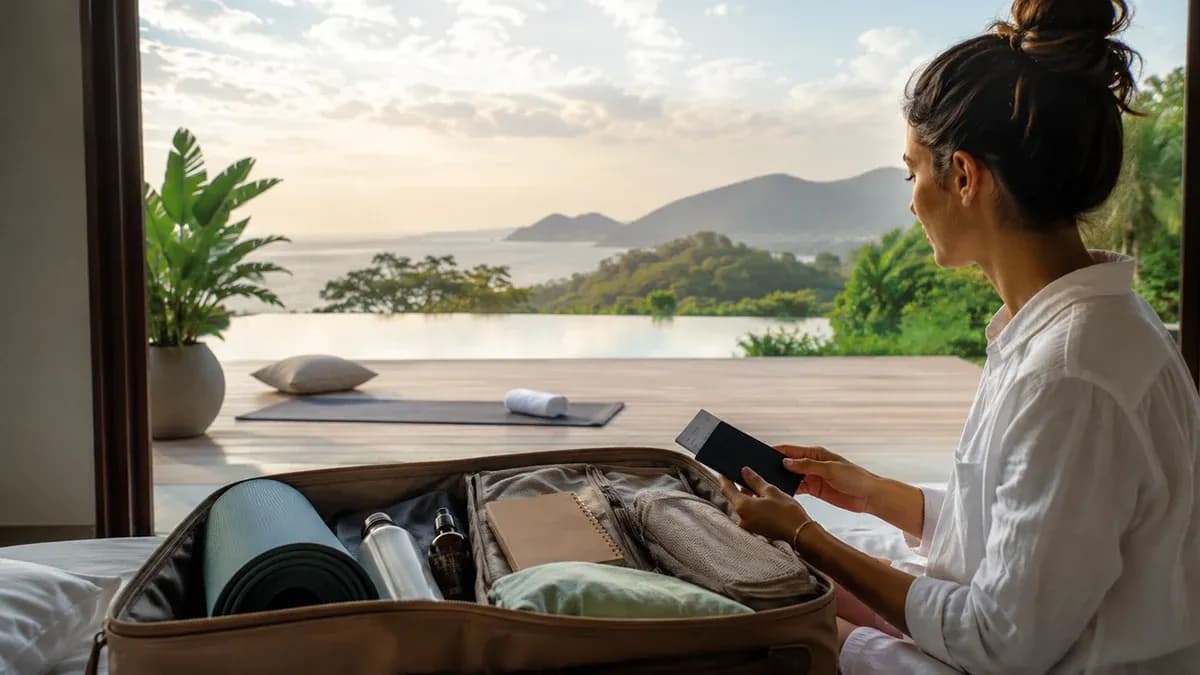
Going on a wellness retreat abroad sounds simple until you start planning it. The destination options are overwhelming, the retreats all look similar online, and nobody tells you what actually matters before you book. This guide cuts through that. From choosing the right retreat to sorting your logistics and packing smart, here is everything you need to know before you go.
What Is a Wellness Retreat (and How to Know You're Ready for One)
A wellness retreat is a structured program built around one goal: getting you out of your usual environment and into a space designed for practice, rest, or reset.
The format varies. Some retreats run over a weekend. Others last a week or more. Some combine yoga and meditation. Others go deeper into specific modalities like breathwork, sound healing, or Ayurveda. What they all share is intention. Every element, the schedule, the food, the setting, is there for a reason.
That is what separates a retreat from a vacation. A vacation gives you freedom. A retreat gives you structure. And sometimes structure is exactly what you need to actually disconnect.
How to Choose Your Destination
The destination decision is simpler than it looks. Start with the practice, not the place.
If Ayurveda is what you are after, India and Sri Lanka are the natural starting points. For yoga with strong lineage and experienced teachers, Mexico, Bali, and Costa Rica have well-established communities. For silent meditation and Vipassana-style programs, Southeast Asia has a long track record. For a more resort-style experience that combines movement, spa, and nutrition, Mexico and Costa Rica offer strong options within a short flight from most US cities.
Once you have a practice direction, filter by these variables:
Duration. Most international retreats run 5 to 14 days. A 5-night retreat abroad gives you roughly 3 full days once you account for arrival and departure. Seven nights is the sweet spot for a first retreat.
Season. Timing matters more abroad than domestically. Bali's dry season runs April to October. Costa Rica has two distinct climates depending on the region. Research before you book.
Budget. All-inclusive retreats in Mexico and Costa Rica offer strong value compared to equivalent experiences in Europe. Bali and Thailand also have wide price ranges.
Distance and travel complexity. Mexico and Costa Rica are 3 to 6 hours from most US cities. Bali and Thailand involve a longer journey, which makes them a better fit for stays of two weeks or more.
BookRetreats lets you filter by practice type, destination, and duration. A good starting point for narrowing down options before you commit to researching individual centers.
How to Choose the Right Retreat (Not Just the Right Destination)
The destination is the easy part. What actually makes or breaks a retreat is who is leading it and whether the format matches what your body and mind need right now.
Start with the teacher.
Look up their bio. Find their lineage. A teacher with solid training will tell you exactly which tradition they work in and how they structure the days without hesitation. Leading weekly classes and leading a seven-day residential retreat abroad are two completely different skills. Ask how many retreats they have led before you commit.
"All levels" is not always what it sounds like.
A Vinyasa intensive and a Yin restorative can both say "all levels" on paper. In practice, they are completely different experiences. Know which one your body is asking for right now, and ask the teacher directly if you are unsure.
Group size shapes the whole experience.
Eight people means real access to the teacher and a more intimate dynamic. Twenty-five people means less individual attention and a different kind of energy. Ask for the maximum group size before booking if that matters to you.
Read reviews outside the retreat's own site.
Look for feedback on BookRetreats, Retreat Guru, or Google. Independent reviews tell you things a sales page never will.
Watch for these before you book:
No clear daily schedule published
Vague or missing teacher bio
Promises that sound too absolute
Slow or evasive responses to your questions
If something feels off in the conversation before you even arrive, that tells you something.
How to Handle the Logistics
Once you have a retreat booked, the practical planning follows a clear sequence. Sort these before you leave and you will arrive ready. Leave them for later and you will spend the first day of your retreat managing details.
Passport and documentation. Check your expiry date before you book anything. Most countries require at least six months of validity beyond your travel dates. Some destinations require a visa. Costa Rica and Mexico do not require one for US citizens. Bali
Flights and transfers. Book flights early, especially for Bali and Thailand where options are limited and prices move fast. For Mexico and Costa Rica there is more flexibility. Confirm with your retreat center whether airport transfers are included or nee
Accommodation. Most residential retreats include accommodation in the program fee. If yours does not, or if you are arriving early or staying after the retreat ends, sort this in advance. Proximity to the center matters more than comfort at that point.
Health preparation. Check the CDC travel health recommendations for your destination before you leave. Some regions have specific considerations around food, water, or mosquito-borne illness worth knowing in advance. This is also the point where travel he
Before getting into what to look for in a plan, it helps to understand where the gap actually sits. Most US travelers assume their domestic health insurance travels with them. It does not.
| Coverage type | Applies in the US | Applies abroad |
|---|---|---|
| Emergency medical care | Yes | Rarely |
| Hospitalization | Yes | Rarely |
| Emergency evacuation | Sometimes | Rarely |
| Prescription medication | Yes | Rarely |
| Pre-existing conditions | Depends on plan | Usually no |
| Flexible destination coverage | No | Depends on plan |

Travel Health Insurance for Wellness Retreats Abroad
Here is something most travelers find out the hard way: your US health insurance does not follow you abroad. Once you leave the country, your coverage either drops significantly or disappears entirely.
A stomach illness, a sprained ankle during a yoga session, or anything more serious becomes a full out-of-pocket expense. That is a realistic scenario, especially when you are doing physical activity in a remote location with limited medical infrastructure nearby.
SafetyWing Nomad Insurance is built for exactly this situation. It covers emergency medical treatment, hospitalization, and emergency evacuation across a wide range of destinations. It works across multiple countries and can be purchased after you have already left home.
For a trip that involves physical practice in a remote or unfamiliar location, that coverage is not optional. It is the part of the planning most people skip and the part they regret skipping most.
What to look for when choosing a travel health insurance plan:
Emergency medical coverage. Core coverage. Make sure the plan covers treatment at local hospitals and clinics, not just evacuation.
Emergency evacuation. If your retreat is in a remote area, this matters. It covers the cost of getting you to adequate medical care if local facilities are not sufficient.
Destination flexibility. If you are moving through multiple countries, check that your coverage applies throughout the trip.
Pre-existing conditions. Most travel health plans do not cover these. Read the exclusions carefully before purchasing.
SafetyWing Nomad Insurance covers the scenarios that actually matter for wellness travel abroad. Emergency medical care, hospitalization, and evacuation, at a fraction of what an uninsured incident would cost you.
What to Pack for a Wellness Retreat Abroad
Packing for a wellness retreat is not the same as packing for a regular trip. You need less in some categories and more in others. The list below assumes a one-week retreat. Adjust for longer stays and always check the climate of your destination before you pack.
One thing most packing guides skip: dress codes matter abroad. In Bali, covering your shoulders and knees is expected in temples and local areas. In Mexico and Costa Rica, a light wrap goes a long way beyond the retreat space. Respect the local culture and you will feel more at ease from day one.
Practice wear
2 to 3 sets of yoga or movement clothes. A light layer for early morning sessions when temperatures drop. Comfortable sandals or slip-ons for moving between spaces.
A sarong or wrap is one of those things that earns its place on every trip. At the retreat it doubles as a cover-up between classes. Outside the retreat, in temples, local markets, or beach towns, it is the difference between fitting in and standing out for the wrong reasons. The SHU-SHI Women's Sarong Beach Wrap is lightweight, packs flat, and comes with a coconut clip so you are not fumbling with knots. One of the most versatile things in your bag.
Recovery
A reusable insulated water bottle. Staying hydrated during physical practice abroad matters more than it does at home, especially in humid climates. The Hydro Flask 32 oz keeps drinks cold for 24 hours and hot for 12. It is leakproof, durable, and the wide mouth makes it easy to clean on the road.
Electrolyte packets, especially for humid destinations. Sweating more than usual during practice depletes sodium and magnesium faster than water alone can replace. LMNT Zero Sugar Electrolytes come in single-serve stick packs, zero sugar, and real electrolyte doses (1000mg sodium, 200mg potassium, 60mg magnesium) that actually do the job. Easy to pack, easy to use anywhere.
A foam roller for muscle recovery between sessions. If your practice involves physical intensity, your body will thank you. The Brazyn Morph Collapsible Foam Roller collapses flat for travel, which most foam rollers do not. Deep tissue texture, lightweight, and it fits in your carry-on without taking up half your bag.
Mindfulness and practice
A personal journal. Retreats move fast internally. Having somewhere to process what comes up between sessions makes a real difference. The Five Minute Journal works well for this because it is structured but not demanding: morning intentions, evening reflections, and gratitude prompts that take five minutes and keep you grounded throughout the week.
Earplugs for shared accommodation settings. Retreat centers are communal spaces. Early risers, different sleep schedules, and unfamiliar sounds can disrupt your rest if you are not prepared. The Loop Switch 2 Earplugs have three adjustable noise relief modes, so you can dial in exactly how much you want to filter out. Reusable, comfortable for side sleepers, and discreet enough to wear all day if you need focus time.
A sleep mask for deeper rest. The Sleenova Sleep Eye Mask has integrated Bluetooth headphones for phone-free use, three modes for rest, nap, and travel, and is optimized for side sleepers. Useful on the flight, useful at the retreat, useful everywhere in between.
Travel logistics
Copies of all booking confirmations, passport, and emergency contacts stored separately from your devices. A universal power adapter. Prescription medication in original packaging with documentation. Travel health insurance sorted before you leave.
KEY TAKEAWAYS
Start with the practice, not the destination. The right place becomes obvious once you know what you are going for.
The teacher makes or breaks a retreat. Check their lineage, ask how many retreats they have led, and trust your gut if something feels off.
"All levels" does not always mean what it says. Ask directly about style and pace before you book.
Your US health insurance does not cover you abroad. SafetyWing Nomad Insurance fills that gap for a fraction of what one uninsured incident would cost.
Sort your logistics early: passport, transfers, and health preparation take minutes to check and much longer to fix on the road.
Use BookRetreats to compare international options by destination, practice type, and duration before committing.
FAQ
Ready to Find Your Retreat Abroad?
The retreat itself is the easy part. Everything around it, the right teacher, the logistics, the coverage, is what actually determines how the experience lands.
Sort those pieces before you leave and you will arrive with nothing to manage but the practice itself. That is exactly the point.
Start comparing international retreat options on BookRetreats. And make sure your health coverage is in place with SafetyWing Nomad Insurance before you board that flight.
Ready to find your retreat abroad?
Get More Wellness Inspiration
Join our community of seekers. Bi-weekly dispatches on holistic science, sustainable living, and hidden wellness gems.
Camila Rios
Nutrition journalist and recovery-focused writer translating complex studies into clear guidance on food, hormones, energy, and daily resilience.
Related Articles
Top Wellness Centers in Los Angeles for Holistic Healing
The Best At-Home Wellness Recovery Tools (That Actually Work)
The Best Meditation Cushions and Essentials for a Serious Practice
Why Barcelona’s Hottest Party This Summer Started With Breathwork Instead of Tequila
How Air Purifiers Work (And Why Your Home Needs One)

Anti-Aging Serums for Sensitive Skin (Without the Backfire)
Top Wellness at Home Trends to Improve Your Well-Being

Precision Wellness: A Smarter Daily Routine

Best Red Light Therapy Panel for Home Wellness